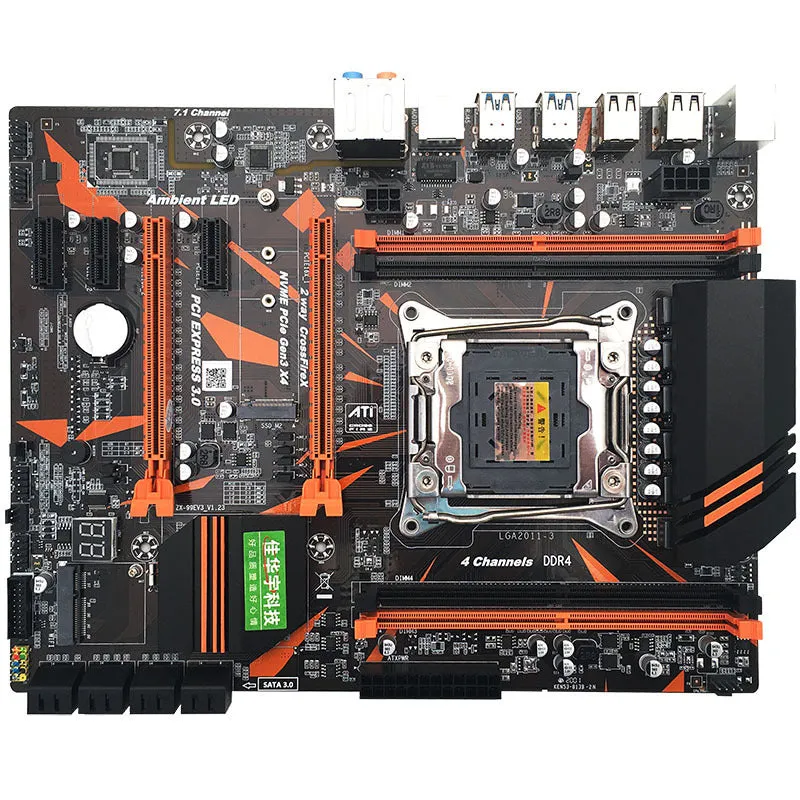
X99 computer motherboard with LGA2011-3 CPU socket supporting four-channel DDR4 memory, integrated 7.1 channel audio and Gigabit network chipset, includes PCI-E x16 slots, M.2 NVMe interface, and diagnostic display with 3-year warranty


X99 computer motherboard with LGA2011-3 CPU socket supporting four-channel DDR4 memory, integrated 7.1 channel audio and Gigabit network chipset, includes PCI-E x16 slots, M.2 NVMe interface, and diagnostic display with 3-year warranty
X99 Platform Motherboard with LGA2011-3 Socket and Four-Channel DDR4 Memory Support

This X99-series motherboard delivers a feature-rich foundation for workstation and high-performance desktop builds, centred around the LGA2011-3 processor interface designed for Intel's enthusiast and professional CPU lines. The board accommodates both the Xeon E5 v3 family (58xx and 68xx/69xx series) and compatible Core i7 processors like the 5820K and 5960K, providing substantial multi-threaded processing capability. With native support for four-channel DDR4 memory architecture, users can configure up to 128GB of system RAM using either standard desktop modules or registered ECC memory for error-correction needs. The integrated component selection eliminates the requirement for separate audio or network expansion cards while maintaining comprehensive connectivity for storage, peripherals, and graphics acceleration.
Processor and Memory Specifications

The motherboard's core computing platform combines a specific CPU interface with advanced memory technology to handle demanding applications. This configuration suits content creation, engineering simulation, virtualization, and gaming environments where both processor threads and memory bandwidth contribute significantly to system responsiveness.
LGA2011-3 Processor Compatibility
The CPU socket accepts Intel processors using the 2011-v3 packaging, which includes the Xeon E5-1600 v3 and E5-2600 v3 series alongside compatible Core i7 Extreme Edition models. Important compatibility notes specify that when using standard i7 consumer processors, registered ECC memory modules cannot be utilized simultaneously—this limitation arises from the memory controller differences between consumer and server-grade CPUs. The socket's pin configuration ensures proper physical mounting while the surrounding power delivery system, with its multiple phases, maintains stable voltage to the processor under varying loads.
Four-Channel DDR4 Memory Architecture
Four physical DDR4 DIMM slots enable memory configurations in single, dual, triple, or quad-channel modes, with each slot capable of accepting modules up to 32GB capacity. Supported speeds include 2400MHz and 2333MHz operation, with the board automatically detecting and applying appropriate timings for installed memory. The dual memory type support—accepting either standard unbuffered DIMMs or registered ECC modules—provides flexibility, though users must select one type exclusively rather than mixing technologies within the same system. This memory subsystem design maximizes bandwidth for applications benefiting from parallel data access across multiple channels.
Memory Configuration Guidelines
When populating memory slots, refer to the motherboard's manual for optimal slot sequencing to enable multi-channel operation. For maximum performance, install identical memory modules in groups of four for quad-channel operation, though two or three modules will operate in corresponding dual or triple-channel modes. Registered ECC memory introduces error-checking functionality valuable for computational integrity in professional workloads, while standard desktop memory offers broader availability and typically lower latency for gaming and general use.
Expansion and Connectivity Features

Beyond core computing elements, the motherboard provides substantial expansion capability through standardized slots and contemporary interfaces. These options accommodate additional processing power via graphics cards, extensive storage arrays through multiple high-speed connectors, and comprehensive peripheral attachment through USB and legacy ports.
PCI Express Expansion Slots
Two PCI-E x16 slots accommodate graphics cards or other expansion cards requiring full bandwidth, operating at Gen 3.0 speeds when populated with compatible devices. Three additional PCI-E x1 slots provide connectivity for sound cards, network adapters, storage controllers, or other accessory cards without requiring full x16 bandwidth. The slot placement considers cooling clearance for larger graphics cards while maintaining accessibility to smaller connectors. Metal reinforcement around the x16 slots provides mechanical strength to support heavier modern graphics cards without stressing the PCB.
Storage and Data Interfaces
Eight SATA 3.0 ports offer 6Gb/s transfer rates for hard drives and solid-state drives, supporting RAID configurations for data redundancy or performance striping. The M.2 PCIe NVMe interface provides direct PCI Express connectivity for ultra-fast solid-state drives, bypassing SATA controller limitations for maximum sequential read/write speeds. This combination allows users to configure boot drives on the M.2 interface while utilizing SATA ports for additional storage capacity, balancing speed and volume according to application needs.
External Connectivity Options
The rear I/O panel includes four USB 3.0 ports and two USB 2.0 ports for peripheral connection, alongside a PS/2 combo port supporting legacy keyboards and mice. Network connectivity comes via the integrated Gigabit Ethernet port powered by the Realtek RTL8111H controller, while audio output accommodates 7.1 channel surround sound through the colour-coded 3.5mm jacks. Additional front-panel USB headers (two USB 3.0 and two USB 2.0) allow case-mounted port connectivity, completing the comprehensive USB implementation.
System Management and Reliability
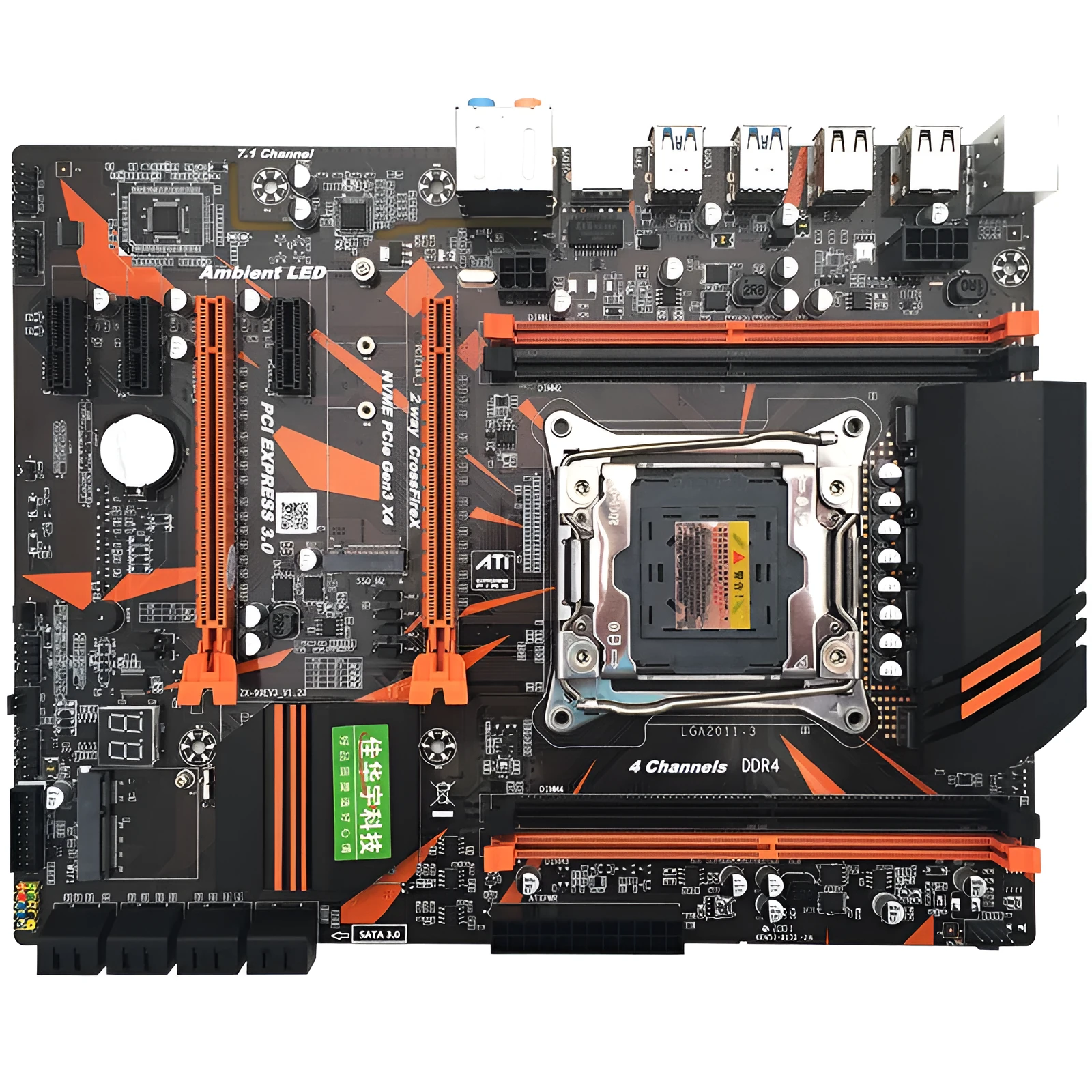
Operational oversight and long-term reliability features assist with system setup, troubleshooting, and maintenance. These elements reduce downtime through diagnostic tools while the warranty coverage provides assurance against manufacturing defects over an extended period.
Diagnostic and Monitoring Tools
A digital fault diagnosis display shows hexadecimal codes corresponding to specific system checkpoints during the boot process, helping identify components preventing successful startup. An integrated buzzer provides audible feedback for basic POST (Power-On Self-Test) status, while the WiFi interface ready designation indicates prepared connectivity for wireless module addition. The eight-colour audio LED lighting visually indicates audio activity and power status, providing at-a-glance system status information without requiring software monitoring tools.
Power Delivery and Cooling
The motherboard requires both standard 24-pin ATX power and an 8-pin EPS12V CPU power connector, with note that reduced functionality may occur if only a 4-pin CPU connector is available. Four power phase design distributes electrical load across multiple regulator circuits, improving efficiency and reducing component heat compared to simpler designs. This power system supports the substantial current demands of high-core-count processors under sustained workloads while maintaining voltage stability for reliable operation.
Warranty and Support Information
A three-year warranty covers manufacturing defects, comprising one full year of free repair or replacement service followed by two additional years of maintenance available at cost. This coverage applies through either the selling retailer or direct manufacturer support channels, with specific terms outlined in accompanying documentation. Product evolution may result in minor component variations between production batches, with continuous optimization potentially altering some aesthetic details like slot colouration without affecting functional specifications.