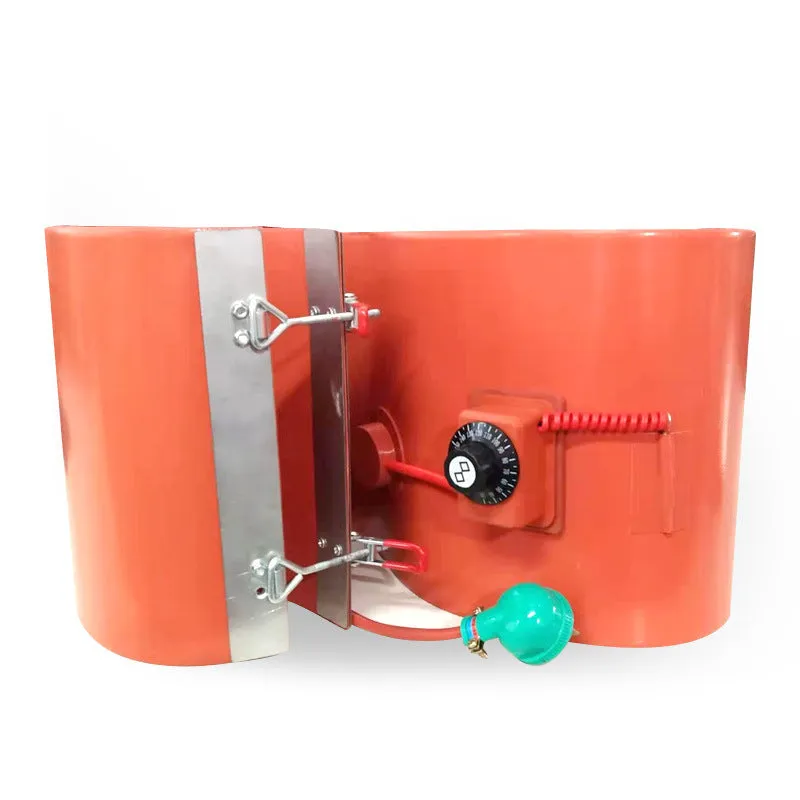
Silicone rubber heating belt for 200-litre oil drums providing heating and insulation, available in 1000W, 2000W, and 3000W power options with either digital display or knob control, and compatible with US electrical outlets.


Silicone rubber heating belt for 200-litre oil drums providing heating and insulation, available in 1000W, 2000W, and 3000W power options with either digital display or knob control, and compatible with US electrical outlets.
Silicone Rubber Heating Belt for 200-Litre Oil Drums with Digital or Knob Control
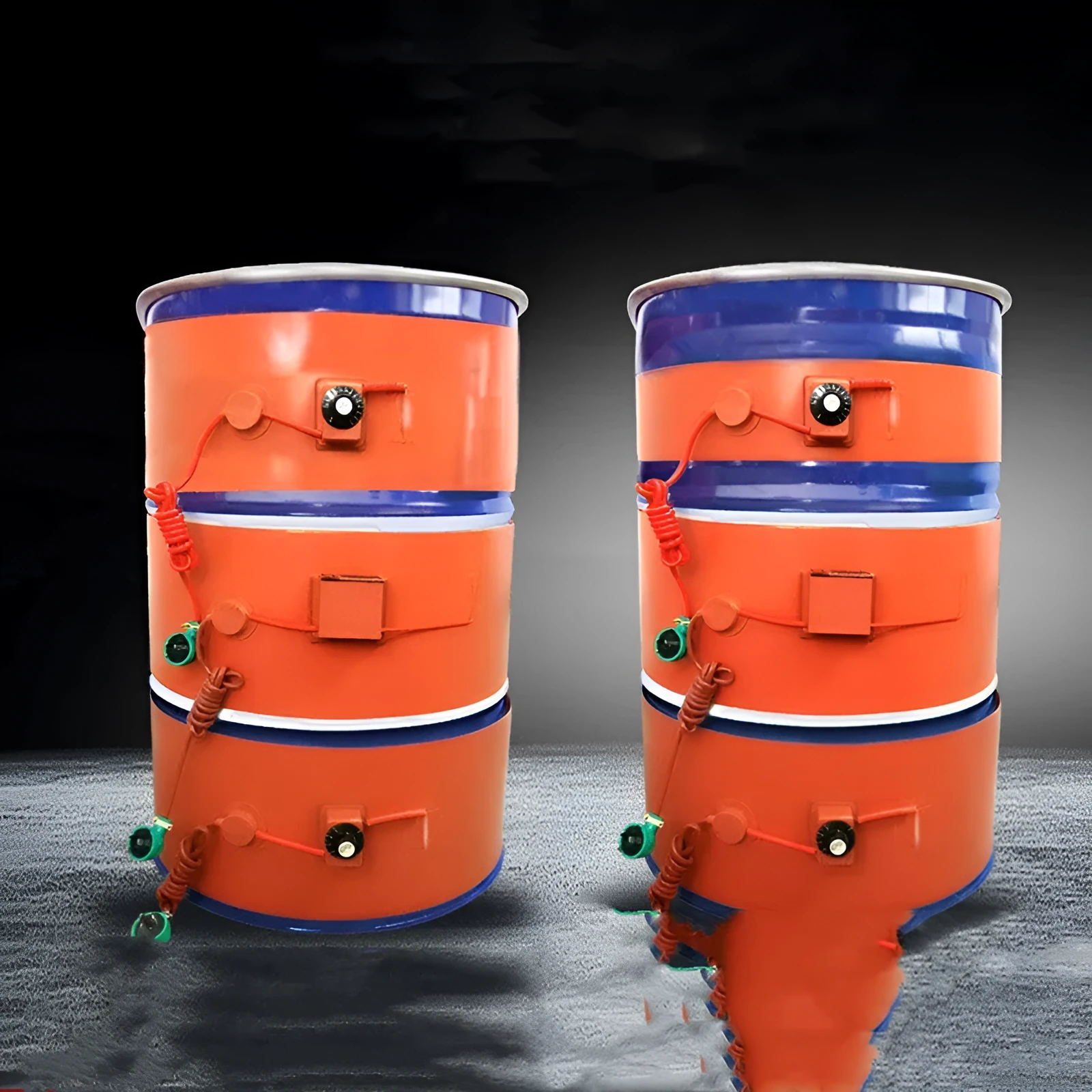
This heating belt provides a focused solution for maintaining temperature in standard 200-litre oil drums, commonly used in workshops, industrial settings, and for storage. Its primary function is heating and insulation, preventing contents from cooling or solidifying. The product is offered with a choice of control mechanisms and power levels, allowing for a tailored approach to drum heating based on the specific viscosity or temperature maintenance needs of the stored material. The silicone rubber build is key to its application, offering the necessary flexibility to wrap securely around the drum's circumference.
Features and Construction

The belt is built around its core function of applying consistent heat to a cylindrical container. Its design parameters are defined by the drum capacity and the available user interfaces for managing the heat output.
Material and Build
The belt is constructed from silicone rubber, a material selected for its thermal properties and pliability. This composition allows the belt to be fitted around the curved surface of a 200-litre drum, ensuring good contact for efficient heat transfer. The silicone also provides inherent resistance to the temperatures it generates, forming a durable heating element sheath.
Size and Practical Fit
This heating belt is designed specifically for a 200-litre oil drum, which is a standard industrial size. The listing does not provide the belt's exact length or width, indicating that its dimensions are engineered to suit this specific drum capacity. When installed, it is intended to wrap around the drum's body to apply heat evenly across a significant portion of its surface area.
Uses and Placement

The product serves a clear industrial or commercial purpose where temperature control of drum contents is necessary. Its application is straightforward but vital in contexts where material flow or chemical processes depend on maintained heat.
Event or Professional Use
In professional environments, this belt can be used to heat drums containing oils, waxes, adhesives, or certain chemicals that need to be kept at a workable viscosity. The availability of different wattages (1000W, 2000W, 3000W) means it can be matched to the thermal demand of the substance, whether for gentle warming or more aggressive heating. The digital display option offers precise temperature monitoring, which can be crucial for sensitive materials.
Everyday Home Use
While primarily an industrial product, it could see use in large-scale hobbyist workshops, on smallholdings, or in situations where an individual is storing and needs to regularly use a significant quantity of a material that congeals when cold. The knob control versions offer a simpler, more robust interface suitable for less technical environments.
Benefits and Buying Value

The value of this heating belt lies in its specialised design and the options provided, which help ensure you get a model suited to your exact needs without over-engineering or underperforming.
Reuse and Low Maintenance
The silicone rubber construction is designed for repeated use on the same or similar drums. Its simplicity means there are few components to fail, and the choice between a basic knob or a digital display allows users to select the level of complexity they are comfortable maintaining. Proper use according to the instructions should provide extended service.
Why Choose This Product
You would select this product if your requirement is explicitly to heat a 200-litre drum. The key differentiator is the choice of power and control: a 1000W knob model for basic, lower-heat needs; a 3000W digital model for high, precise heat demands; or any combination in between. This focused specification avoids the compromise of a one-size-fits-all heater, aiming for efficiency and suitability for the stated task.