
Desktop dual-axis belt sander machine for polishing, sharpening, and grinding, a 750W blue workshop tool with variable speed control from 1000 to 7000 rpm, using 40 x 680 mm abrasive belts and measuring 310 x 250 x 190 mm.


Desktop dual-axis belt sander machine for polishing, sharpening, and grinding, a 750W blue workshop tool with variable speed control from 1000 to 7000 rpm, using 40 x 680 mm abrasive belts and measuring 310 x 250 x 190 mm.
Desktop Dual-Axis Belt Sander: A 750W Variable Speed Tool for Sharpening and Polishing

This blue desktop dual-axis belt sander is a compact workshop tool designed for precision tasks like sharpening knives, polishing metal surfaces, and grinding small components. Its core strength lies in the 750W motor, which delivers consistent power for material removal, combined with a variable speed control system that allows operators to tailor the tool's performance from 1000 rpm up to 7000 rpm. This makes it a versatile choice for transitioning from aggressive stock removal to fine finishing work without needing multiple machines. With overall dimensions of 310 mm by 250 mm by 190 mm, it occupies minimal bench space, offering a dedicated, stable platform for controlled sanding operations using standard 40 x 680 mm abrasive belts.
Features and Construction
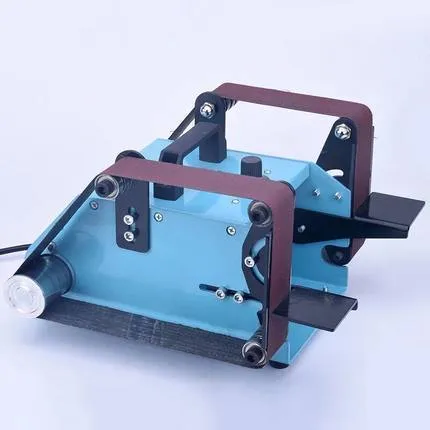
The sander's design centres on practical functionality for workshop use, focusing on adjustable performance and a sturdy build to handle various materials.
Material and Build
The tool's construction utilises materials typical for power tools, including a metal frame for rigidity and stability during operation and plastic components for the housing and switch assembly. This combination provides a durable structure capable of withstanding the vibrations and forces involved in sanding and grinding. The blue external finish offers a distinct visual identity while protecting the underlying materials.
Size and Practical Fit
With dimensions of 310 mm in length, 250 mm in width, and a height of 190 mm, this is a genuinely compact desktop sander. Its footprint is designed to fit comfortably on a workbench without dominating the space, leaving room for workpieces and other tools. The dual-axis design provides two sanding surfaces, increasing utility within this small footprint, making it suitable for home workshops, small-scale fabrication, or model-making spaces where floor-standing equipment is impractical.
Uses and Placement

The variable speed capability and dual-belt design make this sander applicable across several contexts, from hobbyist projects to light professional maintenance work.
Event or Professional Use
In a professional or semi-professional setting, such as a small metalworking shop, knife sharpening service, or furniture restoration business, this sander can handle repeated sharpening of tools, polishing of welded seams, or shaping of wooden components. The ability to dial in a specific speed (from 1000 to 7000 rpm) means the operator can select a low speed for grinding hard tool steel or a high speed for faster material removal on softer woods, improving efficiency and finish quality for different customer jobs.
Everyday Home Use
For the home workshop enthusiast or DIYer, this machine solves common problems like restoring a sharp edge to garden shears, kitchen knives, or woodworking chisels. It can also be used to smooth rough edges on metal brackets, polish small brass fittings, or prepare surfaces before painting. Its compact size means it can be stored easily and brought out for specific projects, providing industrial-grade sanding functionality without requiring a dedicated workshop space or large financial investment in industrial machinery.
Benefits and Buying Value

The value of this sander is rooted in its specific combination of power, adjustability, and space-saving design, offering a focused tool for a range of material finishing tasks.
Reuse and Low Maintenance
The tool is built around the use of standard, replaceable 40 x 680 mm abrasive belts, which are widely available. This design promotes long-term use, as worn belts can be easily swapped for new ones, maintaining performance. The simple mechanical design, centred on a powerful motor and variable speed switch, suggests straightforward maintenance, with fewer complex electronic components that might require specialist servicing, contributing to its potential longevity in a workshop environment.
Why Choose This Product
Choosing this desktop sander comes down to needing a dedicated, powerful sanding station that doesn't consume excessive space. Unlike handheld sanders, it provides a fixed, stable platform that allows for two-handed control of workpieces, leading to more consistent and precise results, especially critical for sharpening. Its 750W motor offers more sustained power than many lower-wattage handheld models, making it more effective for prolonged grinding sessions or harder materials, while the speed control adds a layer of versatility typically found on more expensive, industrial machines.
